Showing posts with label read. Show all posts

Saturday, December 8, 2012

A Rebours

or Against Nature; a new translation of A Rebours (Alternately translated as "Against the Grain") by JK Huysmans


Current price: $40.00

Ok, so this is hardly a book at all in that it has absolutely nothing in common with any other book you've ever read. Huysman was a kook and kind of brilliant at times. La-Bas was better. But this one, there's barely any story.

Des Esseintes, our hero, is the sickly scion of a dissipating landed family. Abandoning his youthful indulgences, he sets out to live the life of an aesthetic hermit, basically a collector of rare and refined sense-impressions. Aside from a few anecdotes of Des Esseintes' wild younger days, the book is a catalog of all the crazy weird shit he keeps in his weird little house in the suburbs of paris that he had built inside a larger house, so he would never have to hear his servants.

A strange, curious and sometimes challenging book- Huysmans spends long passages detailing for instance every book in Des Esseintes' library. This is the "little yellow volume" mentioned in "The Picture of Dorian Gray" and the inspiration for Dorian's collection of jewels. So far I'm the only seller of this edition, marking it high for now.

Monday, May 21, 2012

The Cornelius Chronicles by Michael Moorcock

Selling Price: I'm not certain but I'm sure I lost $1.00 on the sale Is this the turning point?

As of last month it was over a year later and this project was still running itself nicely. Only making a couple of dollars a month but it was still nice to see the shipping notification show up in my inbox occasionally.

I think I read most of the first two Cornelius books. They're an interesting mix of Spi-Fi fantasizing and a typical New Wave SF fondness for ennui and curious stylistic experiments. Moorcock calls it a quartet instead of a quadrilogy: it's not one long story, it's the same story told four times with minor alterations. In the first one super spy Jerry Cornelius is albino, but in the second he's black. Also in each iteration reality seems to be falling apart more severely.

I read these quite a while ago, but Jerry is a space captain in the Moorcock book I'm reading by audiobook now, Doctor Who and the Coming of the Terraphiles, which strikes me as a bit pornographic now that I've typed it out. Yes, Jerry's in this story too I'm told, but I havent gotten there yet. Moorcock can do that, as he's built a huge mythology around elevating his characters to archetypes.

Cornelius is recommended, but one is enough for the most part. As for his venture in the Whoniverse, a subject close to my own heart, well, it's a bit silly.

[Thanks to Prof. Faustaff for fact-checking. ]

Wednesday, April 27, 2011

The Disenchanted by Budd Schulberg

The Disenchanted by Budd Schulberg


I've actually started reading, like, real books since I came to California. My roommate doesn't have a TV, and I've found it kind of refreshing.

I was browsing the free book cart at the Santa Monica Public Library (a lovely place, but I won't be able to get a library card until I changed my driver's license over). I happened to pick this one up to look over when the cart was whisked away. Turns out it was a serendipitous find.

Schulberg is a fellow alum of Dartmouth and is probably best known as the screenwriter of films like The Harder They Fall and On the Waterfront. My screenwriting professor held up the latter film's script as a paragon of screenplay format and plotting. Being a (fairly) recent Dartmouth grad and having made my way out to L.A. to work in entertainment myself, I take this find as a promising omen.

Famously (among Dartmouth folks, anyways), the (mostly true) story of the book goes like this: Schulberg was a junior writer just starting his career after graduation, and had written a treatment for a sweet nothing of a romantic comedy set on campus during the annual winter festival. For obscure reasons the studio brought in no less a luminary than his literary hero, F. Scott Fitzgerald, to punch it up and give it some respectability.

The resulting film: Winter Carnival (1939)

However, Fitzgerald was a recovering alcoholic, and when the strain of traveling to New Hampshire to see the Carnival first-hand proved too much for him, he fell off the wagon in a big way. In an ethanol-fueled haze of a trip from Hollywood to New York City to New Hampshire and back, Fitzgerald and Schulberg try to massage the flimsy story into something more substantial.

It's by far the best book I've read in a long time, and it's positively criminal that it's been out of print since 1989. Schulberg's prose demonstrates a torrid love affair with the English language, and his humor and pathos as he goes from idol-worship to, well, disenchantment for his hero is engaging nearly from cover to cover. And he succeeds most of all in making real the feel of Old Hollywood in the 1930's. This atmosphere and many elements of the story itself were an obvious inspiration for the Coen brothers' bizarro version Barton Fink, which substituted Faulkner for Fitzgerald as the dipsomaniacal writer in decline before veering off into a glorious existential hell.

...

By the way I'm not going to be adding any more books to my Amazon store's inventory. It was great fun back when I was doing the fulfillment myself, but when I moved that was no longer an option, so I shipped all my books out and set up Fulfillment by Amazon. Since then, it's just been a sucker's game of constantly checking my prices and lowering them by a penny every couple of days. Maybe it's worth it if you have lots and lots of inventory to sell, but the profit margin gets cut more than one would expect, and if you set the price point below $3.50, you lose money on the transaction. I went from pocketing to 74% down to 55% of my sales. So now I'm just running out the clock, trying to break even. And I haven't had a sale in over a week? Blah.

Tuesday, December 21, 2010

Madness and Civilization: A History of Insanity in the Age of Reason by Michel Foucault

Grade:
B+ (Difficult but mostly worth it)
Sentimental Value:
Current Price:
$99.99
14.94


Madness and Civilization: A History of Insanity in the Age of Reason by Michel Foucault

The sale of this book has, appropriately enough, been somewhat maddening. It's the last holdout from Foucault, and is something I feel I need to read all of. The parts I studied in school were eye-opening, especially in the way they shed light on other theories of psychology such as that of RD Laing. This is the kind of thing I would like to one day need to know, if I can ever get off my ass and get ready for grad school. I priced it pretty high though, seeing as it's the only copy of that printing for sale on Amazon.

Update 2/7:

I almost didn't make it through the first part about the transformation of the artistic representation of madness from the renaissance to the "classical age" of reason, the enlightenment. It's a slog, if you're not well-versed in the art, literature and history of the period, but I can't be bothered to sort it all out. Eventually I think I pretty much got the picture.

He traces the imagery from the pilgrimage of Bosch's Ship of Fools


to the confinement of first lepers, then, as leprosy disappeared from Europe, the mad as well as criminals and the excess human capital from the first factories (the poor), to the exhibitions of such "monsters" (derived from monstrare: "to show") for entertainment. One administrator found his colleagues had discovered an elegant moral loophole to justify the practice:
The English traveler is right to regard the office of exhibiting madmen as beyond the most hardened humanity. We have already said so. But all dilemmas afford a remedy. It is the madmen themselves who are entrusted in their lucid intervals with displaying their companions, who, in their turn, return the favor. Thus the keepers of these unfortunate creatures enjoy the profits that the spectacle affords, without indulging in a heartlessness to which, no doubt, they could never de-scend.
This became useful as an additional revenue stream after the ineffectual efforts to exert corrective effects on the markets (by incorporating the inmates into a factory for useful work) devolved into a mission to break man's rebellious animal spirit and restore the divine order, based upon the collective acceptance of the curse of human labor. Kind of the same way the Soviets went down.

It makes me wonder what influence the instruments of control developed in the houses of confinement may have had on the methods used by other organizations, based on the training at the last job I had.

It was at a warehouse for a large online retailer. I had to leave after two days. Actually, it's what inspired me to open my bookstore. Now they fulfill my orders, instead of the other way around.

You know those dreams where you're back in college/highschool? The training was like that, except you keep regressing until you're like, "I know I went to Princeton, dammit. What in blazes am I doing in Kindergarten, man?"

Sunday, December 5, 2010

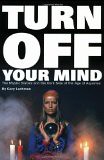
Turn Off Your Mind: The Mystic Sixties and the Dark Side of the Age of Aquarius by Gary Lachman

Grade:
A (Excellent)
Status:
For Sale
Sentimental Value:
$93.23


Gary Lachman (aka Valentine), the keyboardist from Blondie, is a deeply cool guy. He's written about the Gurdjieff work in a very astute yet personal way, and here he unearths all the juicy occult stuff from the little corners it's hidden itself in in 1960's culture, all clearly well researched and referenced.

Some of my weird and mind-bending favorites from the book:

"At a seminar "On Cannibalism and Human Sacrifice, LaVey served the amputated thigh of a young woman, donated by a Berkeley physician, perpared by his second wife Diane following a Fiji islander recipe for puaka balava, 'long pig'. The most satanic of his audience in the early days was the film-maker Kenneth Anger, who introduced Marjorie Cameron, Jack Parsons' widow, to LaVey ... Susan Atkins, who stabbed the pregnant Sharon Tate to death, was for a time a dancer in LaVey's tawdry Topless Witches Revue that played in some of San Francisco's seedy venues. She would later claim it was LaVey who put her on the road to murder. And as we will see, Bobby Beausoleil, another member of the Family convicted of murder, starred in an early version of Anger's Lucifer Rising. Tate's husband, Roman Polanski, was the director of Rosemary's Baby, which features LaVey as the Devil."

So really that last part is a myth, which is weird because I really thought I remembered seeing LaVey as the Devil but it never actually happens. Zizek would have something to say about it, I'm sure. But the occasional misstep is worth it for such a journey through the hidden underbelly of 1960's stardom.

Later Anger falls in with the Stones through the witch Anita Pallenberg, but I don't want to spoil any more of it. It's like Anger's own Hollywood Babylon, but for Rock 'n Roll.


Thursday, December 2, 2010

A Treatise of Human Nature by David Hume

Grade: A (Excellent)
Status: For Sale
Sentimental Value: $19.99


A Treatise of Human Nature by David Hume

So, first up on the chopping block. I actually wrote my final paper for phil on this one. Hume breaks down the source of all morals and human feelings with merciless precision, explaining how and why they come about in an almost phenomenological way, describing how they arise in the mind and make reason "the slave of the passions.”

I compared Hume's analysis of morality with Singer's hypothetical scenario, in which you are walking past a shallow pond and see a child drowning in it. The problem is, you just bought these pants today, and they were really expensive. Do you risk getting the jeans muddy just to save a child who is going to die any second?


Psychologically healthy people would feel obligated to help, to prevent the suffering and death of the child. Singer's comparative example from real life is the equally certain imminent suffering of those threatened with starvation. I would add all the people living in hell in the Congo.

He compares the uncomfortable but morally irrelevant sacrifice of the cleanly state of one’s clothes to the equally morally irrelevant sacrifices of enjoyment of wealth the affluent would have to make to help the starving. The only difference between the two situations, Singer argues, is distance. Thus, if distance carries no intrinsic moral weight, as Singer holds, the affluent are under equal obligation to help alleviate famine as they are to save the drowning child.

Bummer city, right?

The other little story I liked from that class was supposed to illustrate a woman’s right to choose.

Imagine you live in a city where there’s a serious vagrancy problem, and the bums all catch a weird sleeping sickness that causes them to fall down and roll around on the ground. It’s summertime, and no one can afford air conditioning.

It’s a really hot night, and it would feel so much better to open one of the french windows everybody in town has and let the breeze blow through. You can just taste the cool breeze on your skin. But the law states that if through your negligence, one of these bums rolls into your house, you have to feed and care for him for the next 18 years to life.

Proof that NYC is bummer city USA courtesy of Girlnarly aka she of gnarly ideas